


▶
The explainer
How It Keeps You Comfortable
Sweat has no smell — bacteria do. Sixty seconds on what SMELLBLOCK actually does differently, and the lab numbers behind it.

The smell isn't a hygiene failure. It's bacteria doing what bacteria do in 33 degree heat and a closed shoe. Fragrance hides them for a few hours. We block them at the source.
"Deodorizing." "All-day fresh." "Wangi sepanjang hari." Most socks add a scent that sits on top of the bacteria. For a few hours your feet smell minty instead of bad.
The bacteria are the thing making the smell, and fragrance doesn't touch them. By afternoon you're back to where you started, now a mix of minty and not, which is somehow worse. It's also why most "antibacterial" socks stop working after a few washes: the treatment sat on the surface and washed off.
The antibacterial treatment is built into the fibre, not sprayed on. It targets the three specific bacteria behind foot odor and hygiene problems. Mint is in there as a light freshness, never as the thing doing the work.
Odour-component concentration reduced in the standard test (GB/T 33610.2-2017 and GB/T 33610.3-2019), measured on the finished sock. This is the part fragrance can't do: the compound isn't covered, there's less of it.
Inhibition rates measured after the fabric was washed 300 times. The lab is TTTS, a national-level textile testing institute, accredited CMA + CNAS + ilac-MRA, which means the result is recognised internationally, not just by us.
The 300-wash number matters more than the percentages. Anyone can pass a test on a brand-new sock. The question that actually keeps you up is "will it still work in six months." That's the one this report answers.
We don't claim 100% and we don't claim permanent. The 0.9% gap on the toughest bacteria is real, and so are the people who fall into it. We'd rather show you the honest figure than print a number you'd stop trusting the first time it let you down.
There are two reports, and they answer two different questions. The first was run on the finished sock. The second washed the fabric 300 times and ran the bacteria test again. Both are from TTTS. The Chinese documents are the ones the lab issued — where we show an English version, it's our translation and the original is shown with it.
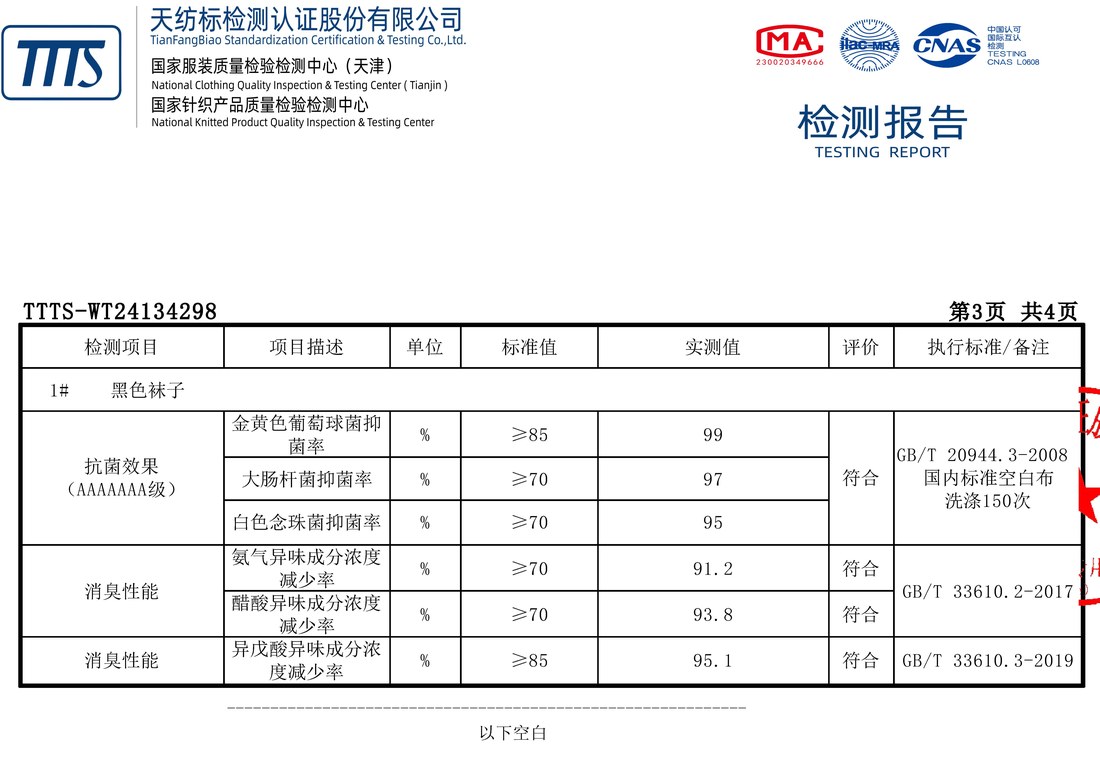
| Sample | 1# black sock (finished product) |
|---|---|
| Condition | After 150 washes |
| Staphylococcus aureus | Required ≥85% · measured 99% |
| Escherichia coli | Required ≥70% · measured 97% |
| Candida albicans | Required ≥70% · measured 95% |
| Ammonia odour | Required ≥70% reduced · measured 91.2% |
| Acetic acid odour | Required ≥70% reduced · measured 93.8% |
| Isovaleric acid odour | Required ≥85% reduced · measured 95.1% |
| Standards | GB/T 20944.3-2008 · GB/T 33610.2-2017 · GB/T 33610.3-2019 |
| Verdict | Pass on every line |
Isovaleric acid is the compound your nose actually registers as "feet". It's what the bacteria produce. In the standard test its concentration came down 95.1%.
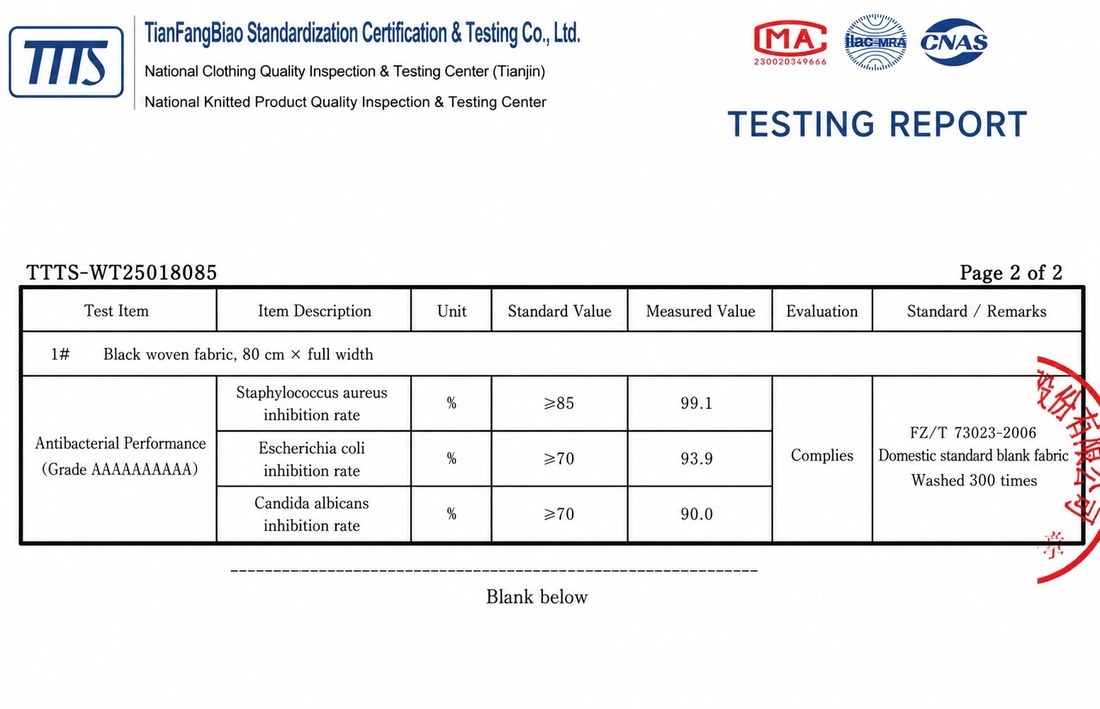
 This is the document TTTS actually issued. Every figure, the report number and the accreditation marks come straight off it — ask us for the PDF and check for yourself.
| Sample | 1# black woven fabric, 80cm × full width |
|---|---|
| Condition | After 300 washes |
| Staphylococcus aureus | Required ≥85% · measured 99.1% |
| Escherichia coli | Required ≥70% · measured 93.9% |
| Candida albicans | Required ≥70% · measured 90.0% |
| Standard | FZ/T 73023-2006, against the standard blank fabric |
| Verdict | Pass |
| Accreditation | CMA 230020349666 · CNAS L0608 · ilac-MRA |
Normal wear is roughly 100–150 washes a year. These tables are our English translation of the rows in the scans — the figures, report numbers and accreditation marks are the lab's, not ours. Want the full PDFs? Ask us on WhatsApp.
It is a sock with antibacterial treatment built into the fibre, lab-tested to keep working through hundreds of washes, designed for heat and long hours in closed shoes.
It isn't a fragrance cover-up, it isn't a medical treatment or a cure for any condition, and it isn't "100%". If you've been sold any of those three before and felt let down, that's fair. So were we, and that's the reason this line exists.
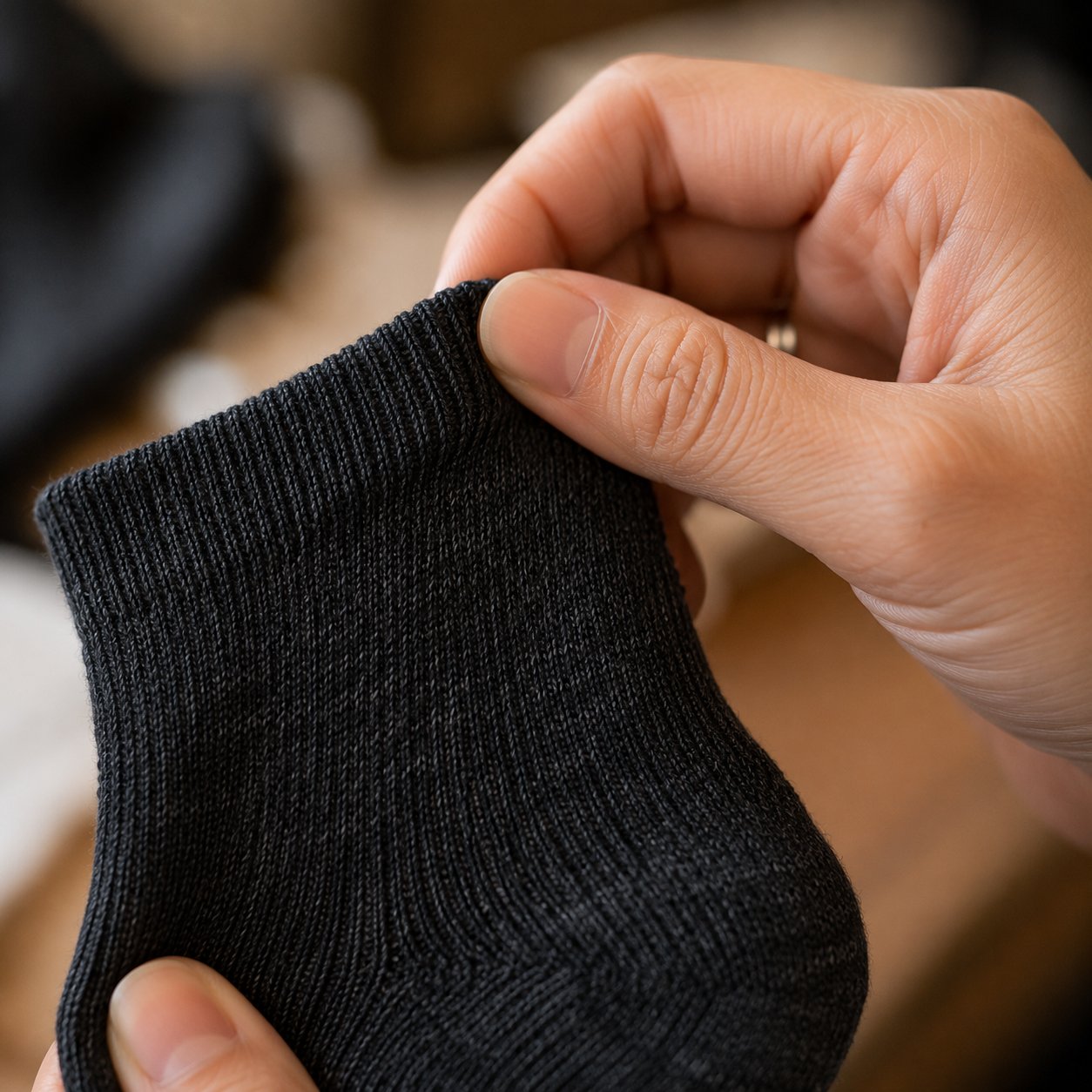
The only test left is the one on your own feet. Give it about a week, and judge it by the door moment, or the absence of it.
Shop socks · from RM7.90Sweat has no smell — bacteria do. Here is the whole mechanism, and what happens when the bacteria run out of places to live.
Sweat has no smell — bacteria do. Sixty seconds on what SMELLBLOCK actually does differently, and the lab numbers behind it.
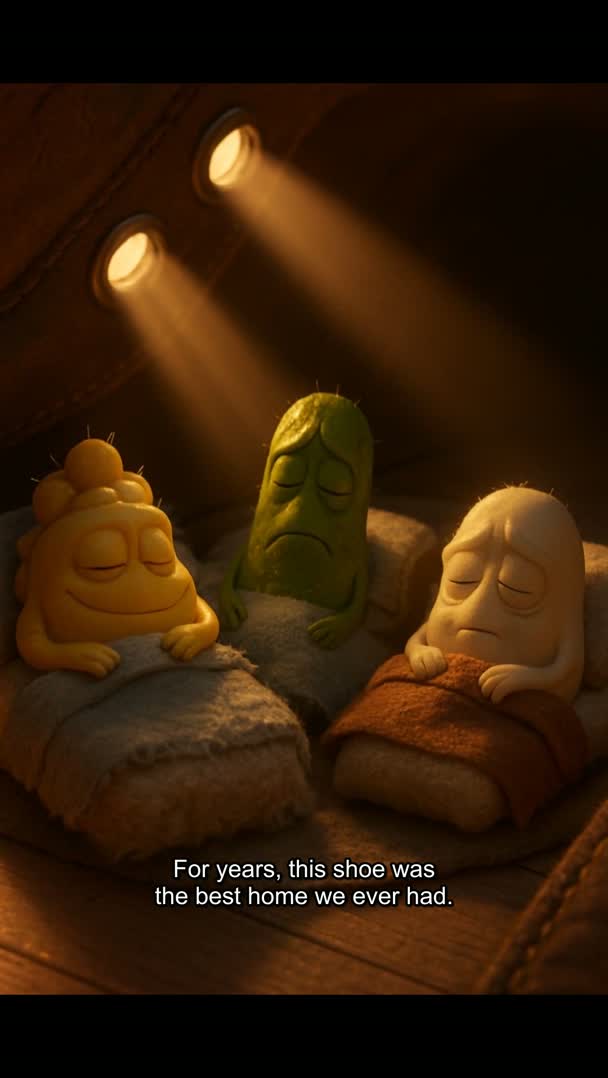
For years that shoe was the best home they ever had — warm, damp, never aired out. Then one morning everything changed.